Wildlife Resources
Wildlife Resources Logo
Hunting Home Contact Us News DNR Home
Wildlife Diversity
Fishing
Law Enforcement
Publications
Disability Services
News/Info
Licensing
go Wild!
License Plate
Kid Zone
go Wild
Deer Hunting Outlook

Chronic wasting disease (CWD), as well as other diseases and parasites in captive deer and elk, is a serious threat to our state's valuable wildlife resources and associated recreation. Private sector commerce of live wildlife continues to prove detrimental to free-ranging deer across the country because this is more than the movement of a single animal but is the movement of a biological package of organisms (i.e. bacteria, viruses, etc.) living on and within each animal moved. The latest documented incident is the introduction of a new louse, which is thought to be decreasing the survival of free-ranging Columbian black-tailed deer in the northwest portion of the United States . There is also strong evidence that captive cervids were responsible for CWD becoming established in free-ranging deer in northwestern Nebraska and circumstantial evidence of captive to free-ranging transmission in Wisconsin .

Legislative efforts in 2004 at both the federal and state level regarding deer farming threaten both traditional agriculture and free-ranging deer wildlife resources in the state. In West Virginia , the efforts to remove WV DNR's regulatory authority over individuals possessing live deer in pens as well as attempts to legalize the sale of venison failed last year. Thus preserving the four principles that have made our state's and national wildlife conservation programs so successful, namely, public ownership of wildlife; elimination of markets in the meat, parts, and products of game mammals and birds; allocation of the material benefits of wildlife by law, not by the marketplace, birthright, land ownership, or social position; and prohibition of frivolous killing of wildlife. Clearly, it is not wise to gamble with animal health and jeopardize the hunting heritage of an estimated 2.7 million hunter days of deer hunting in West Virginia as well as the $233 million annual economic impact associated with deer hunting. For once a disease is established in free-ranging wildlife, it is difficult, if not impossible to eliminate.

For more information on CWD and the fight to keep it out of West Virginia contact any DNR office or visit the Wildlife Resources web site www.wvdnr.gov .

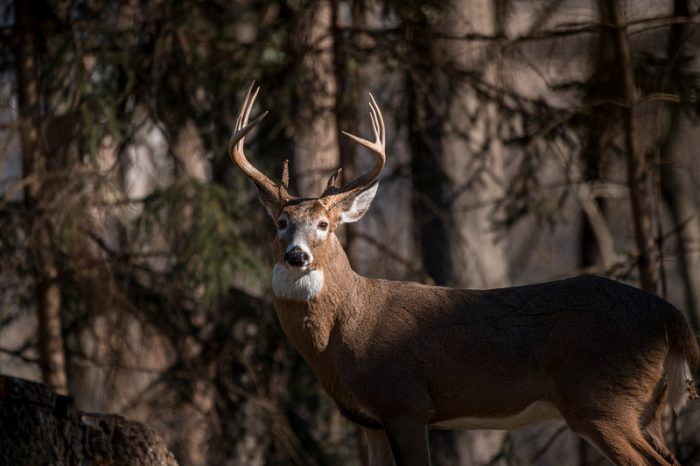
The WV DNR relies on reported deer harvest to assess the number of deer in each county of the state. Declines in reported deer harvest in 2004 have prompted proposed reductions to the 2005 antlerless season. However, the WV DNR will continue to assess past deer season regulations, the influence of weather, hunter effort, 3 straight years of unprecedented below average acorn crop and the impact of deer on their habitat to refine future deer season regulations and achieve a deer population in balance with Mother Nature and people.

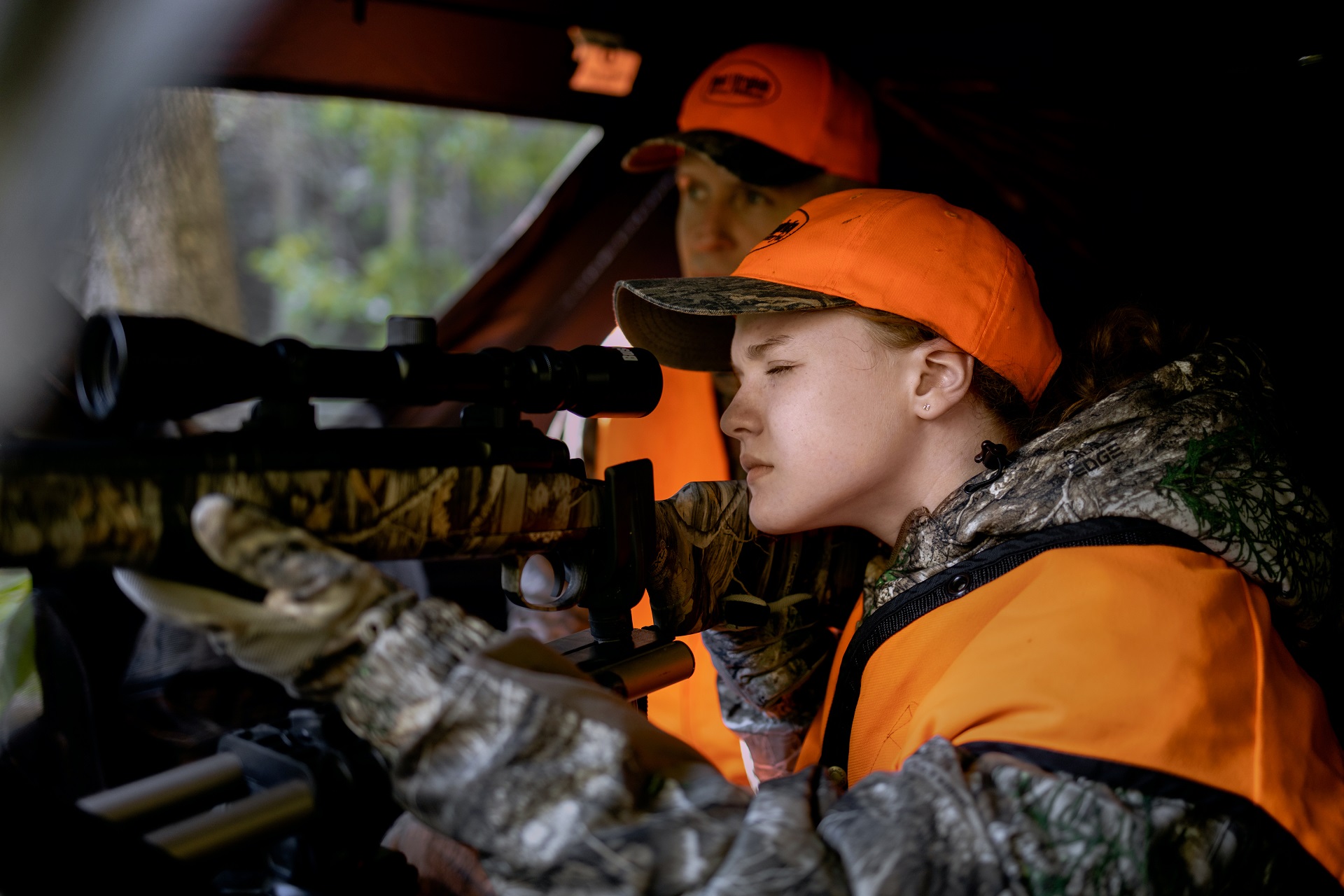
In the 2005 antlerless deer season the DNR proposes that all of 37 counties and portions of 4 additional counties be open to antlerless deer Class N hunting. The DNR proposes that 25 of these counties will have a 22-day split antlerless season on private land, 12 days of which would be concurrent with the traditional bucks-only deer season. Private land in these 25 counties would open from November 21 through December 10, and open again December 28 through December 31. Sixteen additional counties, or portions thereof, would be open on private land for 18 days, November 21 through December 10, with a bag limit of one antlerless deer. All of three counties and portions of three counties are also proposed to be open for 18 days but hunters must apply for permits. All of 14 counties and portions of an additional 4 counties are proposed to be closed to antlerless Class N deer hunting. Except for two wildlife management areas that would be open for 22 days and two that are closed to antlerless hunting, all other public land in the 41 counties, or portions thereof, would be open for a six-day antlerless deer season, December 5 through 10, 2005. All National Forest land in Greenbrier, Nicholas, Pocahontas, Randolph, Tucker, and Webster counties and portions of Pendleton County would be closed to antlerless hunting. On nine wildlife management areas hunters would need to apply for a limited number of antlerless licenses. Sixteen counties or portions are proposed to have a one antlerless season deer bag limit. In 25 counties a hunter could take three antlerless deer with Class N antlerless licenses and one antlerless deer on an unfilled RG or RGG additional deer license. Thus, the maximum total season deer bag limit that can be taken on antlerless Class N licenses in 2005 is proposed to remain the same as that of 2004. Again, as in 2004, a split three-day Special Youth and Class Q antlerless deer season is proposed to be held on November 5 and December 26 and 27 on private land and 22 wildlife management areas in 41 counties or portions thereof open to antlerless (Class N) deer hunting.

White-tailed deer hunting season regulations for 2005 will be published and available to hunters in July of 2005. This newsprint like pamphlet contains complete information on gun, archery, muzzleloading, and antlerless deer hunting, plus other hunting regulations on turkey, bear, boar, and small game. Hunters will be able to obtain a copy from any DNR office or any business that sells West Virginia hunting licenses or visiting the Wildlife Resources Section web site at www.wvdnr.gov .


Written by James M. Crum


HOT TOPICS...
 | Game Harvest |  Trout Stocking |  Wildlife Viewing |  Licenses/Permits | 
 | Fishing Waters |  Park Regulations | 
Contact Webmaster | wildlife@wvdnr.gov
© 2003 West Virginia Division of Natural Resources