
![]() |
![]() |
![]() |
![]() |
| Hunting Home | Contact Us | News | DNR Home | ![]() |
|
|
| Wildlife Diversity |
| Fishing |
| Law Enforcement |
| Publications |
| Disability Services |
| News/Info |
| Licensing |
| go Wild! |
| License Plate |
| Kid Zone |
|
Bucks and Blackpowder: Hunting at McClintic WMA and Wilson Cove The morning would be here soon; but
not just any morning. For 325,000
hunters, the opening day of buck season in West Virginia is the most
anticipated day of the year. On a ridge top near the border between
Virginia and “The Mountain State,” a hunter settles into his stand in the
pre-dawn darkness. As the hunter waits
for the first glimpse of pink light, he ponders the past. He thinks of the mountain men who settled
this land. He also reflects on the
great bucks, bears and other wildlife of a time long gone by. Finally, he wonders about the weapons used
by early hunters in search of venison. Reflecting on yesteryears, he gently rubs
the curly-maple stock of his Pennsylvania rifle. As the first ray of light silhouettes the ridge top, he awaits
his chance to drop the hammer and send a cloud of smoke billowing down the
mountainside. It is evident that this
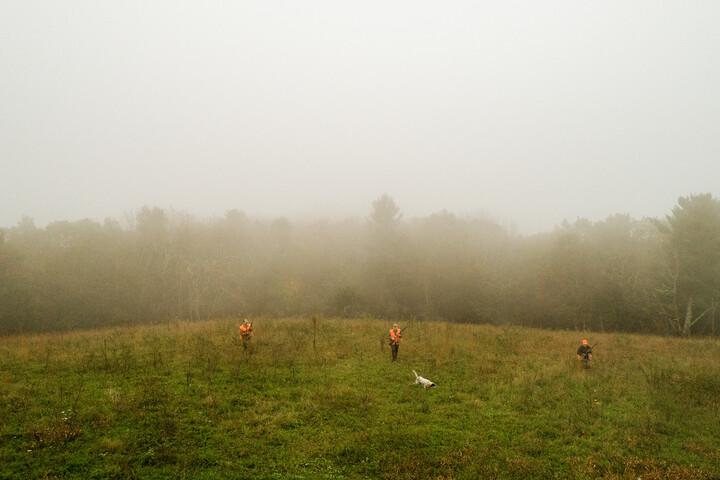
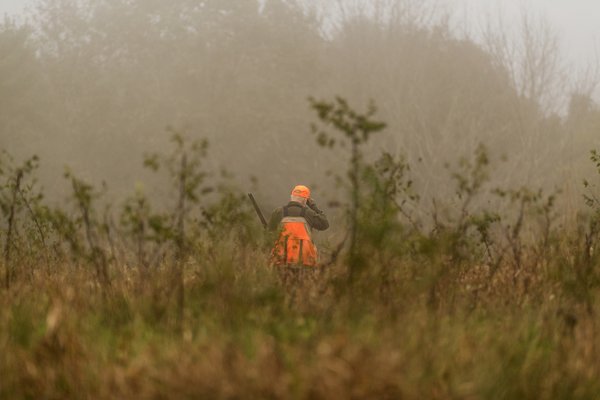
hunter has opted for a greater challenge than most. That challenge is Wilson Cove in the Eastern Panhandle. As light cascades across West Virginia, a
chorus of gunfire follows in its wake.
Hunters on the western side of the state now await their turn. In the
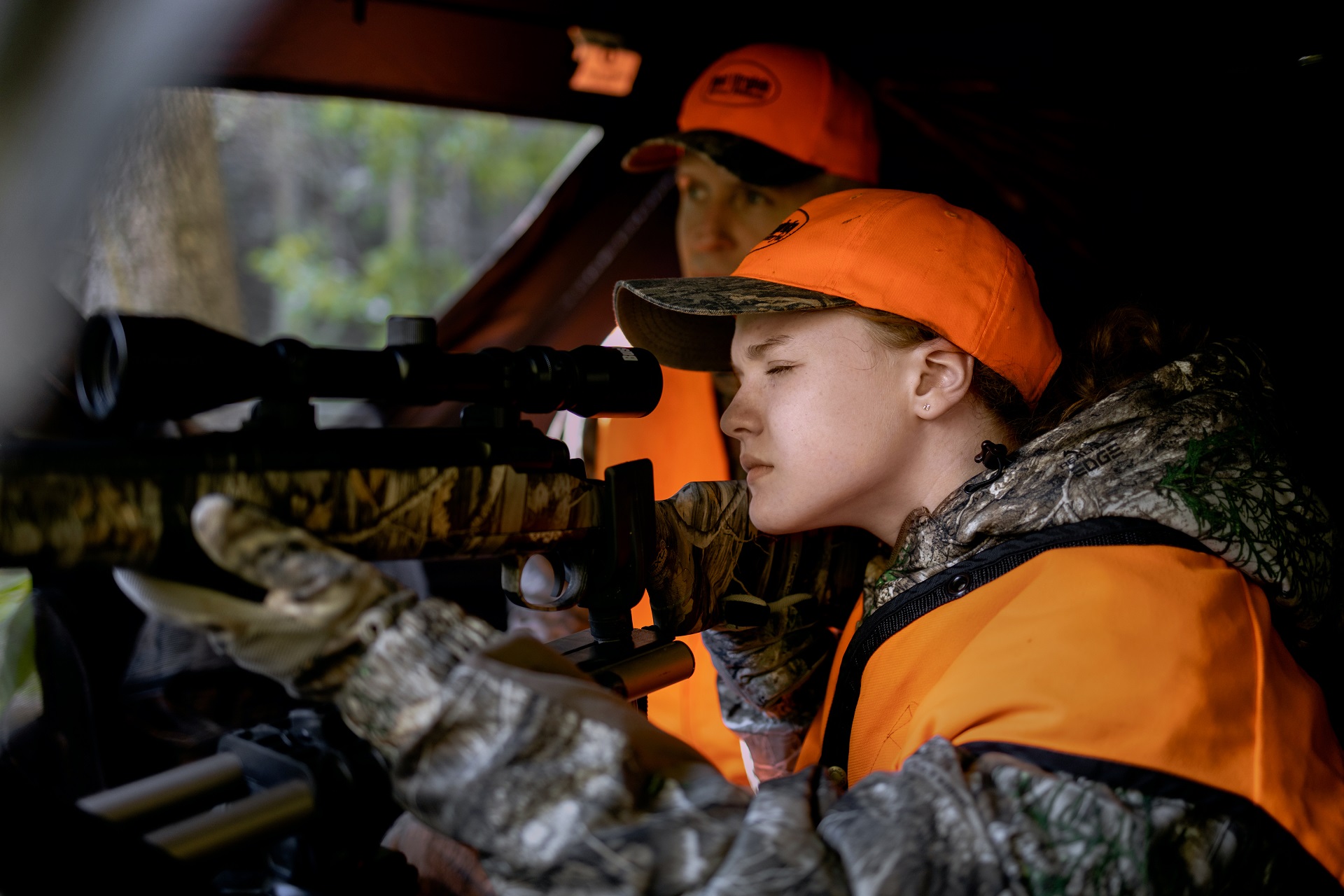
Ohio River valley at the McClintic Wildlife Management Area, a hunter adjusts his
safety harness and pulls his day pack up 18 feet to his portable tree stand
locked in a large white oak. He has everything needed to stay on stand all day.
As he settles in, his thoughts wander back
over the events of the last several months.
He recalls the scouting trips he made on the hot summer evenings in
August. Closing his eyes, he envisions
the large bucks with velvet-covered antlers he sighted through his binoculars
feeding in a nearby soybean field. He
remembers the excitement of finding large rubs and huge scrapes in late October
and the close encounter he had with a Pope and Young-class buck in the pre-rut
of early November. He realized long ago
that great hunts can be had without firing a shot. He is jolted back to the present by the familiar
sound of a deer walking in dry leaves.
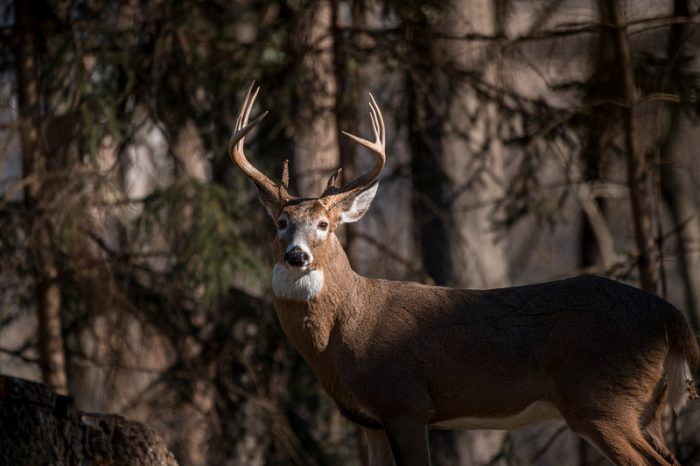
A single deer, probably a buck, the hunter reasons. As he strains to see the deer in the thick
brush surrounding his stand, he catches a glimpse of an antler. He quickly positions himself for a shot and
removes the gun’s safety. As the young
buck walks into a clearing only 40 yards from his stand, he smiles, glances at
the arm-sized rubs below his stand, and returns the rifle to the safety
position. This young six-point with the
10-inch spread is not the buck he is after.
He is satisfied, however, in knowing this young buck has a chance to
mature because it is not legal for harvest on the McClintic WMA. The West Virginia Division of Natural
Resources long-range deer management plan pledges to provide a diversity of
deer hunting opportunities. After two
years of collecting harvest data and surveying hunter attitudes, the DNR chose
to designate 5,300 acres of national forest land as a “muzzleloader only” area
during buck season. The area, known as
“The Wilson Cove Deer Study Area” was selected because of its physical features
and limited access. The cove is located in the easternmost part
of the George Washington National Forest.
In fact, more than half the area is bounded by remote Virginia forest
land. The only road entering the area
is Waites Run Road. This feature has
simplified the process of collecting data and surveying hunters while also
making it better for law enforcement. During the fall of 1997, the DNR
implemented the regulation change to allow only the use of muzzleloaders during the buck firearm season. No other regulation changes have been
made. For example, antlerless deer may
still be harvested using conventional firearms. The primary reason for creating such an
area was to provide a unique hunting experience for smoke-pole hunters. A secondary goal was to increase the age
class of bucks within the study area.
After five years of muzzleloader-only hunting in the dense, rugged
habitat of Wilson Cove, a buck harvested in 2001 was aged to be 8 1/2 years
old. Data collected by DNR wildlife managers and biologists reveal that few
bucks statewide ever reach this age. Hunting pressure has also changed during
the last five years. For instance,
archery hunting has more than doubled since 1997. Hunter participation during the traditional muzzleloader season
has more than tripled! As expected,
some hunters have chosen other locales.
Others however have made the trek from as far away as North Carolina and
Florida. The enthusiasm and attitudes of hunters in Wilson Cove seem to differ
from the norm. For a lot of these
sportsmen, it’s not all about just killing deer. It’s about “The Hunt.”
These attitudes can be found in hunter surveys. The surveys show that hunters now pass up
more small bucks than they did prior to 1997. With a good deer population found
throughout the state, strategies for deer management like Wilson Cove have
evolved from ideas to reality. For
some, Wilson Cove offers a unique experience for a specific type of sportsman. Make no mistake -- Wilson Cove is not a
trophy management area. But, if large
antlers stir your passion, DNR biologists have established a niche just for you
at McClintic Wildlife Management Area. Located in Mason County along the Ohio
River, McClintic WMA offers 3,800 acres of the state’s most fertile and diverse
wildlife habitat. In 1999, DNR
personnel decided that McClintic WMA would be a good location to experiment
with older-age buck management. The
desire to harvest older large-antlered bucks is a natural evolutionary step for
many of today’s hunters. Hunting
magazines and videos are filled with information detailing hunting techniques
and management strategies designed to grow and harvest big bucks. To reach the goal of producing more
older-age bucks, antlerless hunting
opportunity was increased and a harvest restriction was implemented requiring
that all adult bucks killed have an outside antler spread of at least 14
inches. Most experienced deer hunters realize that the spread between the ear tips
of an adult buck is approximately 14 to 15 inches and can be used to estimate
antler spread of deer in the field. Harvest data indicates that the 14- inch
restriction protects 99 percent of all one-year-old bucks and 60 percent of the
two-year-old age class. Prior to 2000,
the first year of the harvest restriction, hunters harvested 60 to 70 adult
bucks annually on McClintic WMA. During the fall 2000 hunting season, the
legal harvest consisted of one buck killed with a bow and four taken during the
gun season. This reduction in harvest
was expected because hunting pressure because most hunters realized there would
be few bucks available that met the 14-inch restriction. Hunters returned during the 2001 season,
however, with more bucks available and increased antlerless hunting
opportunity. Last season’s legal harvest of 20 bucks included four bow kills
and 16 gun kills. These are encouraging
results for hunters looking for an opportunity to hunt large bucks. This antler restriction does not guarantee
that all hunters who visit McClintic WMA will kill a large buck. But it does offer a unique hunting
experience for hunters who are willing
to pass up small bucks in hopes of
bagging a mature whitetail. And
remember, a great hunt can be had without firing a shot. DNR personnel realize that areas like
Wilson Cove and McClintic are not for everyone. In fact, they were never meant to be. That’s one reason why they are considered so special. -- Charles Teets is
the wildife manager at the Wardensville WMA and Dave McClung is the wildlife
manager at McClintic WMA. |
|
HOT TOPICS... |
|||||||
|---|---|---|---|---|---|---|---|
|
Trout Stocking |
Wildlife Viewing |
Licenses/Permits |
| Fishing Waters | Park Regulations | |
|||||||
|
Contact Webmaster
|
dnr.wildlife@wv.gov © 2003 West Virginia Division of Natural Resources |
|||||||