
Get ready to enjoy hunting adventures in the forests and fields of West Virginia. Our regulations summaries are your guide to West Virginia’s world-class hunting seasons, providing you with current rules and essential knowledge to help you hunt safely and ethically and make the most of your time outdoors.
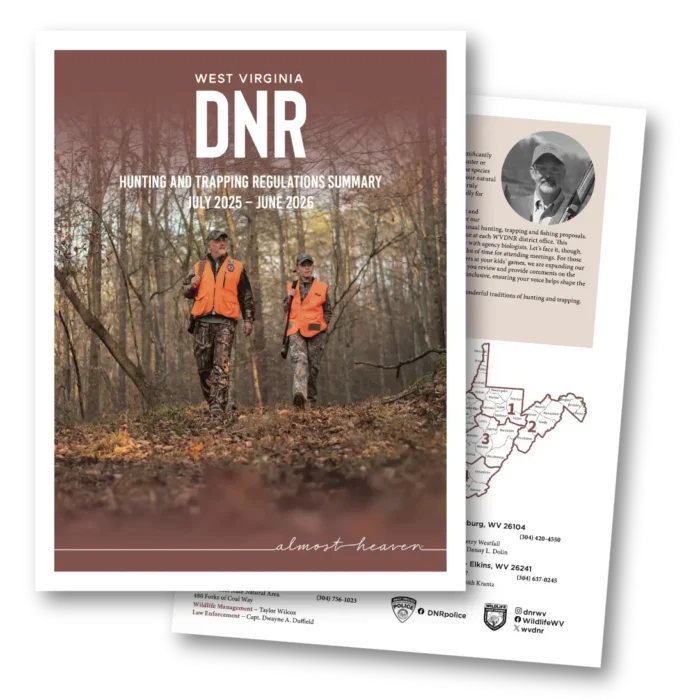
Hunting and Trapping Regulations
For season dates, open counties, bag limits and other helpful tips for West Virginia’s big and small game seasons, download the Hunting and Trapping Regulations Summary for the 2025-2026 seasons.
New for 2025-2026
- Season dates and open counties for antlerless deer, fall turkey and black bear hunting seasons have changed.
- Deer carcass transport regulations for Grant County and baiting and feeding restrictions in Pendleton County are now implemented.
- Minimum youth age restrictions for the youth seasons have been removed.
- The maximum caliber restriction for hunting coyotes at night has been removed.
- The Small Arms Hunting Stamp (A1) has been eliminated for hunting with a handgun.
- An unmanned aerial vehicle (UAV) can be used for tracking and locating mortally wounded deer, bear, wild turkey or wild boar.
- Only one leashed dog can be used for tracking and locating mortally deer, bear, wild turkey or wild boar.
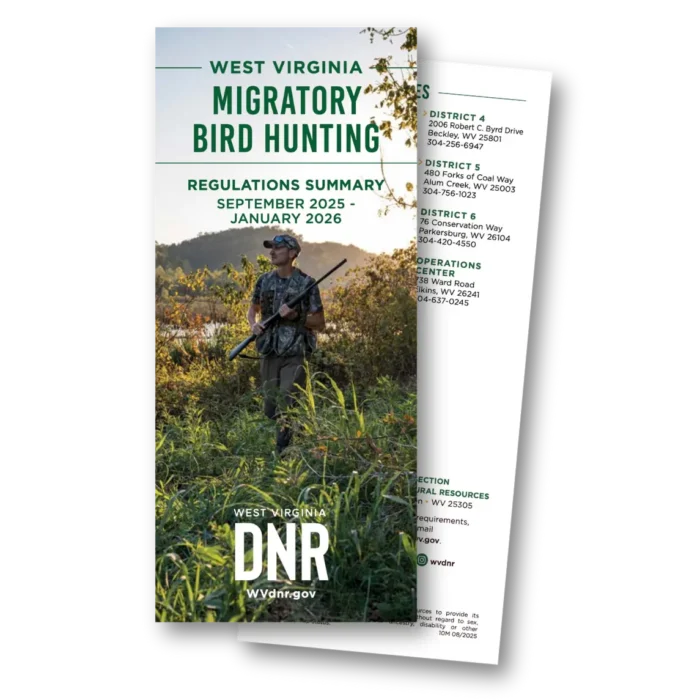
Migratory Bird Hunting Regulations
For season dates, bag limits and other helpful tips for West Virginia’s migratory game bird seasons, download the Migratory Bird Hunting Regulations Summary for the 2025-2026 seasons.
New for 2025-2026
- Minimum youth age restrictions for the youth seasons have been removed.
- Concurrent waterfowl and deer gun season limitations have been modified.
- An interim northern pintail strategy has been adopted by the USFWS, increasing the daily bag limit of pintails to three and the possession limit to nine.
- Duck segment dates have been modified.
- Beginning July 1, 2025, migratory e-Stamps will be available for purchase at duckstamp.com/e-stamp, in addition to 30 other states that sell e-Stamps.
If you want to request a printed copy of the current regulations, contact your local authorized hunting license agent or WVDNR District Office.