![]() |
![]() |
![]() |
![]() |
| Hunting Home | Contact Us | News | DNR Home | ![]() |
|
|
| Wildlife Diversity |
| Fishing |
| Law Enforcement |
| Publications |
| Disability Services |
| News/Info |
| Licensing |
| go Wild! |
| License Plate |
| Kid Zone |
Deer - Antlerless Season
|
|||||||||||||||||||||||
| An antlerless deer is any deer having no antlers or having no antler greater than three inches long above the hairline. The maximum annual bag limit in a county or any legal combination of counties is four Class N or NN antlerless deer. |
|||
|
Counties or parts thereof Season Bag Limit: 4 November 23-24 (Private Land Only) November 25 – December 12 and |
Counties or parts thereof Season Bag Limit: 2 Two Class N or NN deer may be taken in each county, not to exceed an annual total bag limit of 4 Class N or NN deer. November 23-24 − (Private Land Only) November 25 – December 12 and |
Counties or parts thereof Season Bag Limit: 1 One Class N or NN deer may be taken in each county, not to exceed an annual total bag limit of 4 Class N or NN deer. November 23-24 (Private Land Only) November 25 – December 12 and |
Counties of parts thereof and Season Bag Limit: 1 Only one Class N antlerless deer may be taken in this group of counties and WMAs. November 23 − 24 (Private Land Only) November 25 – December 12 and |
Berkeley |
Barbour |
Braxton |
CountiesClay 200 Wildlife Management AreasBurnsville Lake 100 |
Counties not listed in the table are closed to firearms antlerless hunting. December 6, 2009, closed to antlerless hunting. *See pages 15-16 for exceptions and special regulations regarding antlerless season on WMAs and other public lands. **Hampshire County will also have a special resident and nonresident Class N or NN antlerless season on private and public land October 30-31, 2009, with a bag limit of one antlerless deer (see page 21). A maximum of four antlerless deer may be taken on Class N or NN stamps (one per day, except that two may be taken on the same day, December 7-12, 2009 on private land only, provided the first deer is legally checked prior to hunting a second deer). |
|||
All antlerless deer taken during the antlerless deer season or the portion of the antlerless deer season concurrent with buck season must be taken on a Class N or NN stamp, Class DT license or as a landowner. See exception for concurrent archery hunting on page 21.
All West Virginia residents must purchase a Class N stamp to hunt during the antlerless season with the following exceptions:
All nonresidents, military personnel, senior citizens, Class Q and QQ, disabled veterans, former POWs and underage hunters not exempted must purchase a Class N or NN stamp to hunt antlerless deer during the antlerless season.
Class N or NN stamps may be purchased at any license agent, county clerk’s office, the DNR offices in Charleston and Elkins, or on the DNR Web site (see page 41).
Class N or NN stamps are nontransferable. Class N or NN stamps are not county specific, but in limited resident counties or WMAs, the Class N stamp must be accompanied by a valid eligibility card.
During the antlerless season a Class N or NN stamp holder may substitute a bow for a firearm to take antlerless deer.
Only one antlerless deer may be taken on each Class N or NN stamp.
Only one antlerless deer may be taken per day, except that two antlerless deer may be taken on the same day during December 7-12, 2009, on private land only, provided the first deer is legally checked prior to hunting a second deer.
No person may actively participate (driving) in any manner in hunting antlerless deer without a valid Class N or NN stamp or otherwise being exempt from having a Class N or NN stamp.
There are nine counties or parts thereof where a hunter may take two antlerless deer and 27 counties or parts thereof where a hunter may take four antlerless deer during the antlerless season by purchasing multiple Class N or NN stamps (see pages 12 and 19). Hunters may take up to two or four antlerless (Class N or NN) deer in each county or part thereof not to exceed the bag limit specified in each county or part thereof and not to exceed the maximum statewide bag limit of 4 antlerless (Class N or NN) deer. See pages 15-16 for antlerless regulations on Wildlife Management Areas and other public lands.
Three counties or parts thereof and six wildlife management areas (WMAs) have a limited number of Class N stamps for resident antlerless deer hunting (see page 19). To be eligible to hunt in one of these counties or WMAs an application must be submitted by August 21, 2009. Successful applicants will receive notification from the DNR by mail. See pages 15-16 for antlerless regulations on Wildlife Management Areas and other public lands.
In limited resident antlerless counties or parts thereof and limited
resident antlerless WMAs, a hunter may take only one deer in the
antlerless season.
To apply, ask your license agent for an antlerless permit application or download one from www.wvdnr.gov.
Six counties or parts thereof have an unlimited
number of Class N or NN stamps for resident
and nonresident antlerless deer hunting (see
pages 13 and 19). No application is necessary for
these counties. Hunters may take one antlerless
(Class N or NN) deer in each county or part
thereof in this group of counties, not to exceed
the maximum statewide bag limit of 4 antlerless
(Class N or NN) deer. See pages 15-16 for antlerless
regulations on WMAs and other public lands.
| Limited Resident | ![]() |
|
| Unlimited Resident and Nonresident |
||
| *Private land only in Clay and Randolph counties. |
||
There will be a special two-day Class N or NN antlerless deer season in Hampshire County on October 30- 31, 2009, for resident and nonresident hunters. Hunters must purchase a Class N or NN antlerless stamp or hold a Class DT license to participate in this special antlerless season. Resident landowners, their resident children, and resident tenants who permanently live on the property, are not required to purchase a Class N stamp if hunting on their own property. The bag limit for this special season is one antlerless deer.
The purpose of this special antlerless deer season is to continue surveillance for Chronic Wasting Disease (CWD − see page 40) and to determine its prevalence and distribution within the county. Selected deer checking stations in the county will be staffed by DNR Wildlife Resources personnel and biological data along with tissue samples will be collected and sent to a certified laboratory for CWD testing. Hunters will be able to check the DNR Web site, www.wvdnr.gov, for test results of those deer from which samples were collected.
See page 11 for special regulations regarding deer carcass transport and baiting and feeding of wildlife within this designated portion of Hampshire County.
During antlerless season, concurrent hunting for small game and bear (where the season is open) is legal; however, no hunter except those legally hunting antlerless deer or bear shall be afield with a firearm with solid ball ammunition or shot shells containing larger than No. 4 shot, except for waterfowl hunters using nontoxic shot.
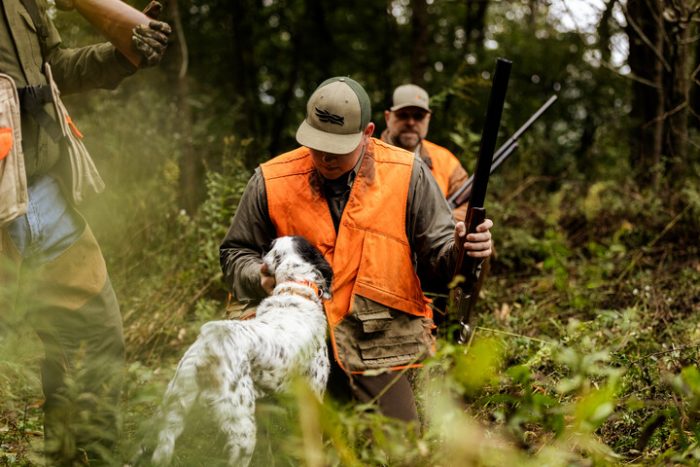
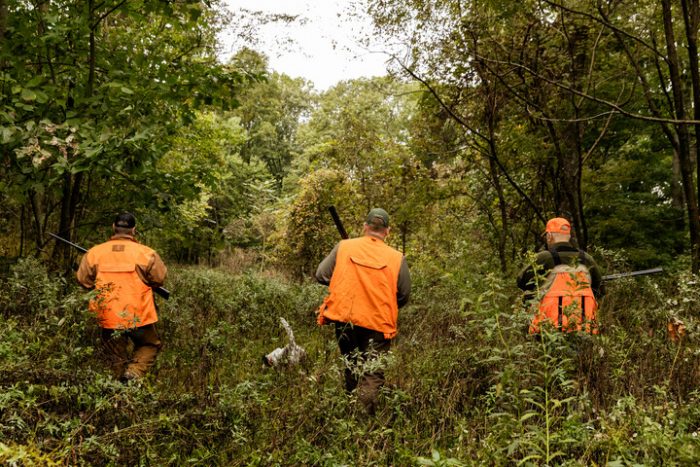
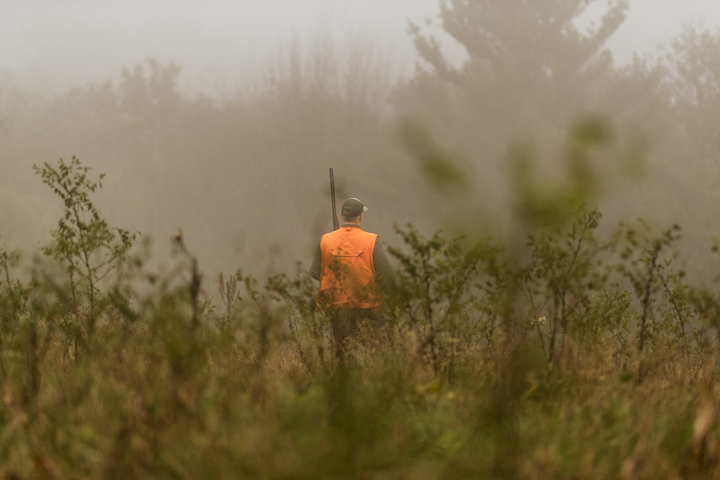
Concurrent archery hunting for antlered and antlerless deer is legal during the antlerless season subject to all archery deer hunting regulations. All persons hunting during deer firearms seasons (except those engaged in farming activities on their own land and waterfowl hunters) must wear at least 400 square inches of blaze orange as an outer garment.
Concurrent waterfowl hunting is legal (see separate Migratory Bird Hunting Regulations publication).
|
HOT TOPICS... |
|||||||
|---|---|---|---|---|---|---|---|
|
Trout Stocking |
Wildlife Viewing |
Licenses/Permits |
| Fishing Waters | Park Regulations | |
|||||||
|
Contact Webmaster
|
dnr.wildlife@wv.gov © 2003 West Virginia Division of Natural Resources |
|||||||