Wildlife Resources
Wildlife Resources Logo
Hunting Home Contact Us News DNR Home
Wildlife Diversity
Fishing
Law Enforcement
Publications
Disability Services
News/Info
Licensing
go Wild!
License Plate
Kid Zone
go Wild

Deer - General Regulations
2009-2010 Hunting Regulations

Resident Deer Hunting License Privileges | Resident Landowner Privileges | Nonresident License Privileges | Hunting Hours and Restrictions | Firearms/Bows and Equipment | Blaze Orange Requirement | Field Tagging, Checking and Transporting | Hampshire County Chronic Wasting Disease (CWD) Containment Area | Baiting and Feeding Regulations

Resident Deer Hunting License Privileges with

Annual Classes X and XJ, Lifetime Classes A-L and AB-L, Military, Disabled Veteran, former POW, Senior Citizen and Underage:

entitles a hunter to take one deer during the archery season, one antlered deer during the buck season and one deer during the muzzleloader season (see pages 24 and 29 for special archery and muzzleloader seasons).

Additional stamps must be purchased:

  • to hunt an additional antlered deer in buck season: Class RG
  • to archery hunt an additional deer: Class RB
  • to hunt antlerless deer in antlerless season: Class N
  • to hunt with a handgun: Class A-1
  • to hunt an additional deer with a muzzleloader in muzzleloader season: Class RM

Annual Class A (must also have a Class CS):

entitles the hunter to hunt one antlered deer during the buck season.

Additional stamps must be purchased:

  • to hunt an additional antlered deer in buck season: Class RG
  • to archery hunt deer: Class BG
  • to archery hunt an additional deer: Class RB
  • to muzzleloader hunt deer in muzzleloader season: Class BG
  • to hunt an additional deer with a muzzleloader in muzzleloader season: Class RM
  • to hunt antlerless deer in antlerless season: Class N
  • to hunt with a handgun: Class A-1

Back To Top

Resident Landowner Privileges

West Virginia resident landowners may hunt on their own land without obtaining a license. See definition of resident landowner privileges on page 8.

A resident landowner hunting on his/her own land without a license can take the same number of deer as a licensed hunter. A hunter (licensee or landowner) cannot take more than the number of deer allowed in the respective seasons.

After killing a deer as a landowner, a person cannot take another deer by use of a license for which the privilege has already been used. Example - if a landowner has a Class X or A license and kills an antlered deer on his own land during buck season, the landowner cannot use the Class X or A license to kill another buck during the buck season. He/she can check the deer in as a landowner kill or on the Class X or A license. Either way, the Class X or A privilege to kill an antlered deer during the buck season has been used.

Back To Top

Resident and Nonresident License Privileges with a Class DT Special Hunting and Fishing License for Persons with a Life -Threatening Condition

A resident or nonresident under age 21, who qualifies for and obtains a Class DT license, may hunt for and take the legal number of deer allowed in each season in compliance with county and statewide regulations without purchasing or otherwise obtaining any additional licenses or stamps, providing the Class DT license holder and assistant must abide by all other pertinent laws and regulations. Class DT license holders must be accompanied by a licensed adult 21 years of age or older.

Stonewall Resort State Park Deer Season

November 16-19
Applications and information available July 1 at www. wvdnr.gov, district DNR offices and State Parks

Nonresident License Privileges

Nonresidents ages 8 thru 17 who have satisfactorily completed a Hunter Education Course may purchase a Class XXJ license and a Class CS/LE stamp:

entitles the holder to take one deer during the archery season, one antlered deer during the buck season, and one deer during the muzzleloader season.

Additional stamps must be purchased:

  • to hunt an additional antlered deer in buck season: Class RRG
  • to archery hunt an additional deer: Class RRB
  • to hunt antlerless deer in antlerless season: Class NN
  • to hunt an additional deer with a muzzleloader in muzzleloader season: Class RRM

All other nonresidents, except those who hold License Classes XXJ or DT, regardless of landowner status, must purchase an annual Class E license and a Class CS/LE stamp:

entitles the holder to hunt one antlered deer during the buck season.

Additional stamps must be purchased:

  • to hunt an additional antlered deer in buck season: Class RRG
  • to archery hunt deer: Class UU
  • to archery hunt an additional deer: Class RRB
  • to muzzleloader hunt deer in muzzleloader season: Class VV
  • to hunt an additional deer with a muzzleloader in muzzleloader season: Class RRM
  • to hunt antlerless deer in antlerless season: Class NN
  • to hunt on national forest lands: Class I
  • to hunt with a handgun: Class A-1

Back To Top

Hunting Hours and Restrictions

After a person has killed his/her legal daily limit of deer, they may not participate further in hunting deer with either a bow or firearm the remainder of the day.

After killing the legal limit of deer, a hunter shall not be afield with any firearm with solid ball ammunition, unless legally hunting bear, or shot shells containing larger than No. 4 shot unless legally hunting waterfowl using nontoxic shot.

It is legal to hunt small game during the muzzleloader season with a .22 caliber rimfire.

A hunter may take no more than three antlered deer per calendar year in all archery and firearms seasons combined.

Back To Top

Firearms/Bows and Equipment

It is illegal to hunt deer with:

  • a shotgun using ammunition loaded with more than one solid ball, or a rifle using rimfire ammunition of less than .25 caliber.
  • a fully automatic rifle, shotgun or handgun.
  • a handgun using a straight-walled case of less than .357 magnum cartridge or a bottle-necked case of less than .24 caliber.
  • a muzzleloader of less than .38 caliber during the muzzleloader deer season.
  • both a gun and a bow, or with a gun and any arrows, except that persons having a concealed weapons permit may carry a concealed handgun for self-defense only.
  • a crossbow, except for the holder of a Class Y or Class YY permit during designated archery seasons. Crossbows must have:
    • a draw weight of at least 125 pounds.
    • a working safety.
    • bolts at least 18 inches long.
    • broadheads with at least two edges at least ¾ -inch in width.
  • a bow with arrows having less than two sharp cutting edges, measuring less than ¾-inch in width.
  • a bow locking device, except with a modified bow permit issued by the Director.
  • an arrow with an explosive, drug-laced or poisoned head or shaft.
  • anything other than a bow or single-shot muzzleloader on Green Bottom WMA, except that the holder of Class Y or YY permit may hunt with a crossbow during designated archery seasons.
  • an electronic call.

Back To Top

Blaze Orange Requirement

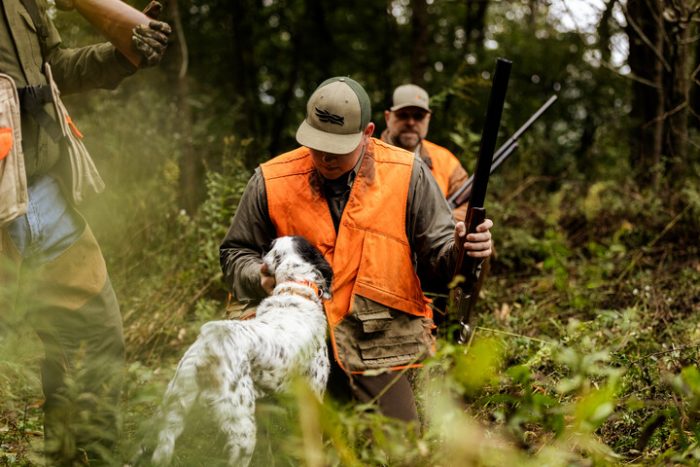
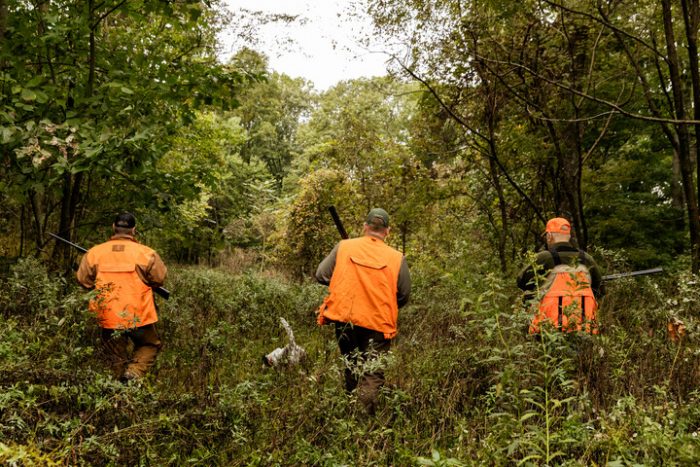
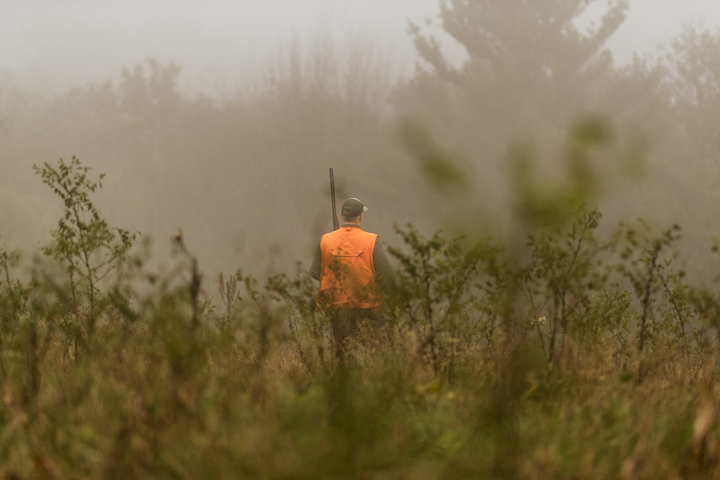
Persons hunting in counties or portions thereof where a deer firearms season is presently open shall wear a blaze orange outer garment of at least 400 square inches. This applies to counties or parts thereof with a special youth/Class Q or QQ deer season. This does not apply to waterfowl hunters and persons engaged in farming activities on their own land.

Back To Top

Field Tagging, Checking and Transporting

Each person killing a deer must attach a completed field tag to the deer or remain with the deer and have upon their person a completed field tag before moving the carcass from where it was killed. A person who does not have a field tag must make one. This tag must bear the hunter’s name, address, hunting license number (if required) and the date, time and county of kill. Immediately upon arriving at a residence, camp, hunting lodge, vehicle or vessel the field tag shall be attached to the deer and must remain on the carcass until it is tagged with an official game checking tag.

The unskinned carcass or the fresh skin and head of each deer, shall be delivered to a conservation officer or an official checking station for checking and retagging:

  1. before it is transported beyond the county adjacent to the county of kill,
  2. within 72 hours from when it was killed or 24 hours from the close of the respective season, whichever comes first.

All deer killed in Logan, McDowell, Mingo or Wyoming counties shall be checked and retagged at an official game checking station in the four-county area within 24 hours of the time of kill. Deer killed outside these four counties may not be checked within the four-county area.

A hunter may not hunt an additional deer until the day after legally taking a previous deer providing previously killed deer has been checked, except for that portion of the antlerless deer season during which two deer may be taken on the same day on private land provided the first deer has been legally checked.

No person may transport wildlife killed by another hunter, unless the wildlife or parts thereof is accompanied by a paper tag filled out legibly bearing the signature, address, date of kill, hunting license number (if required) and the official game checking tag number (if required) of the hunter who killed the wildlife. The tag shall also specify the species and quantity of wildlife.

Back To Top

Hampshire County Chronic Wasting Disease (CWD) Containment Area

Includes all portions of Hampshire County north of US Route 50.

Map of Hampshire County CWD containment areaCarcass Transport Regulations

Hunters are prohibited from transporting dead cervids (deer, elk, etc.) or their parts beyond the boundary of the containment area except for the following:

  1. meat that has been boned out,
  2. quarters or other portions of meat with no part of the spinal column or head attached,
  3. cleaned hide with no head attached,
  4. clean skull plate (no meat or tissue attached) with antlers attached,
  5. antlers with no meat or tissue attached, and
  6. finished taxidermy mounts.

Hunters may transport cervid carcasses that were not killed inside the containment area through the containment area.

Baiting and Feeding − see regulations listed below.

Back To Top

Baiting and Feeding Regulations

It is illegal to bait or feed cervids or other wildlife in a “Containment Area” as determined by the Director and established for the management, control or eradication of chronic wasting disease or other wildlife diseases. Song and insectivorous birds may be fed, provided that such feeding shall not cause, or be done in a manner that would be reasonably anticipated to cause, a congregation of cervids or other wildlife. Provided further, that captive cervids may be fed inside cervid facilities permitted by the Division of Natural Resources.

It is also illegal to bait or feed wildlife on Beech Fork Lake, Bluestone Lake, Burnsville Lake and McClintic WMAs and on Coopers Rock and Calvin Price State Forests (see pages 23, 26, 28).

Back To Top


HOT TOPICS...
Trout Stocking |  Wildlife Viewing |  Licenses/Permits | 
 | Fishing Waters |  Park Regulations | 
Contact Webmaster | wildlife@wvdnr.gov
© 2003 West Virginia Division of Natural Resources